


When it comes to the next wave of computing, waiting isn’t a strategy.
The live session for our most recent Quantum opportunities sprint opened with an admission that would’ve been heretical five years ago. Rizwan Hussain from IBM Quantum described the industry as moving “from quantum as science fiction to quantum delivering commercial and business value”. In one sentence, he conceded the scepticism of the past decade while drawing a line under it.
The question for executives has shifted accordingly. It’s no longer whether quantum will matter, but whether your organisation will be ready when it does.
Ready? Set? No.
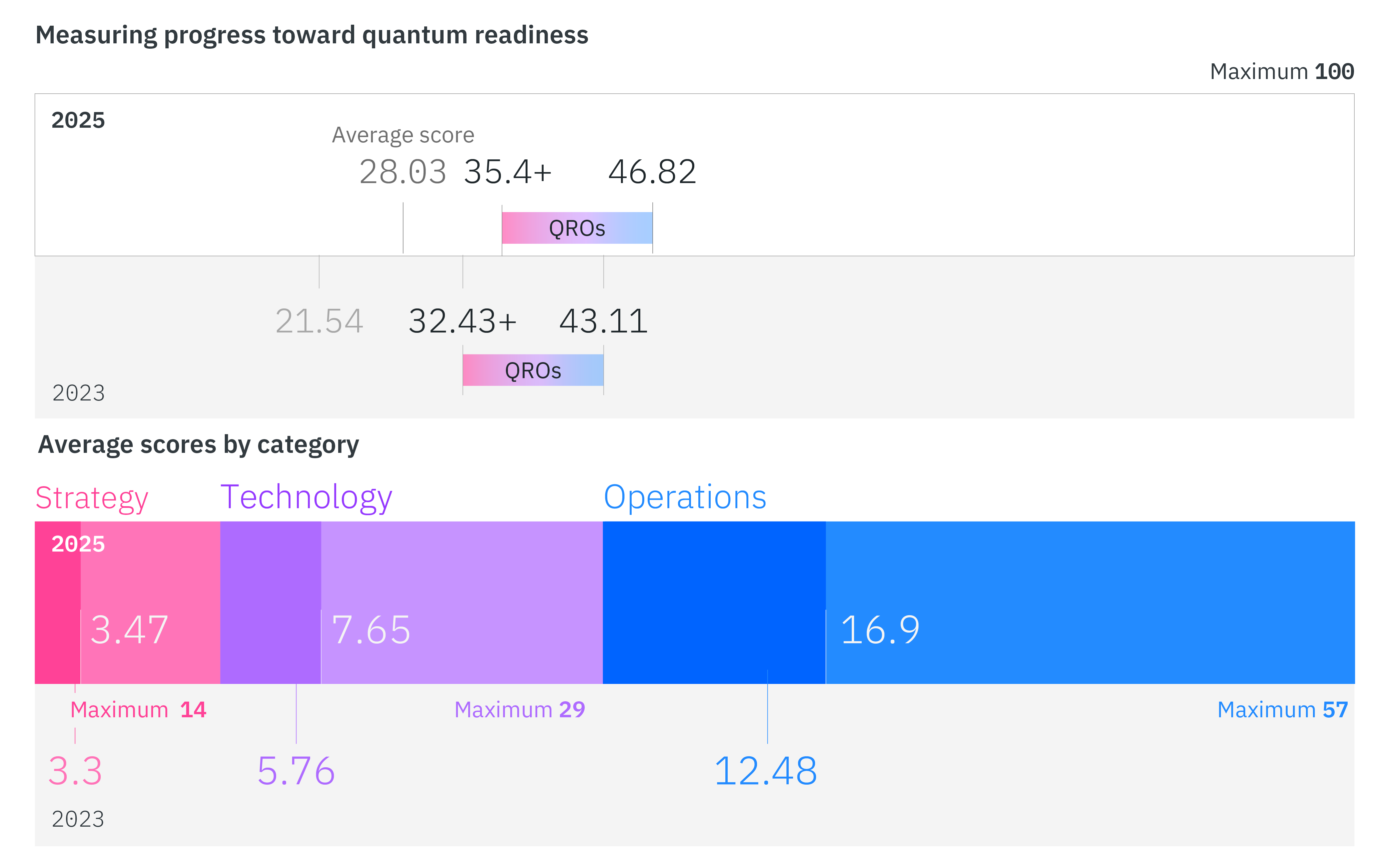
Veena Pureswaran, Research Director at the IBM Institute for Business Value, shared data from IBM’s Quantum Readiness Index, a 100-point scale measuring strategy, technical capability, and operating-model maturity. The 2023 average was 21.5. By late 2025, it had crept to 28. Progress? Yes. Readiness? No.
The study surfaced five patterns separating the top decile from everyone else. One stood out for boards: organisations treating immature technology as a barrier are statistically more likely to miss quantum advantage entirely, pushing their window past 2030. Those treating it as a pacing problem are already capturing value through ecosystems, governance frameworks, and dedicated innovation roadmaps.
The distinction reframes the waiting question. You can’t turn on a quantum computer overnight, nor hire the right team in a quarter. The capability is built in the years before the technology arrives—or it’s not built at all.
The cryptographic clock is ticking
Umut Cikla, IBM’s Quantum Safe lead for APAC, delivered the session’s most uncomfortable numbers. The cryptography protecting most digital infrastructure—, the encryption algorithm used for things like banking transactions and authentication—relies on problems classical computers would need millions of years to solve. Quantum computers, on current roadmaps, will solve them between 2029 and 2032.
Bad actors aren’t waiting. Harvest now, decrypt later attacks are already happening: encrypted data siphoned today, held against the day the key can be broken. For any information with a shelf life beyond five years, the threat is active. NIST [the US federal agency that sets technical standards across industries] finalised post-quantum cryptographic standards in 2024. Most organisations have not begun migration.
Umut’s assessment: “For many, four years will not be enough.”
Are you asking the right question?
Quantum won’t replace classical computing or AI. The future is quantum-centric supercomputing: CPUs, GPUs, and QPUs [Quantum Processing Units] addressing different classes of problem. Quantum doesn’t mean a faster computer. It’s a different one, suited to molecular simulation, optimisation at scale, and pattern-finding in structured chaos.
Which means the question isn’t When do we buy one? but Which problems in our business are actually quantum-shaped , and who inside the organisation is qualified to tell?
Waiting isn’t a strategy. But it is a liability.
Ready to take the next step?
Prepare for computing’s next era with the Quantum opportunities sprint.